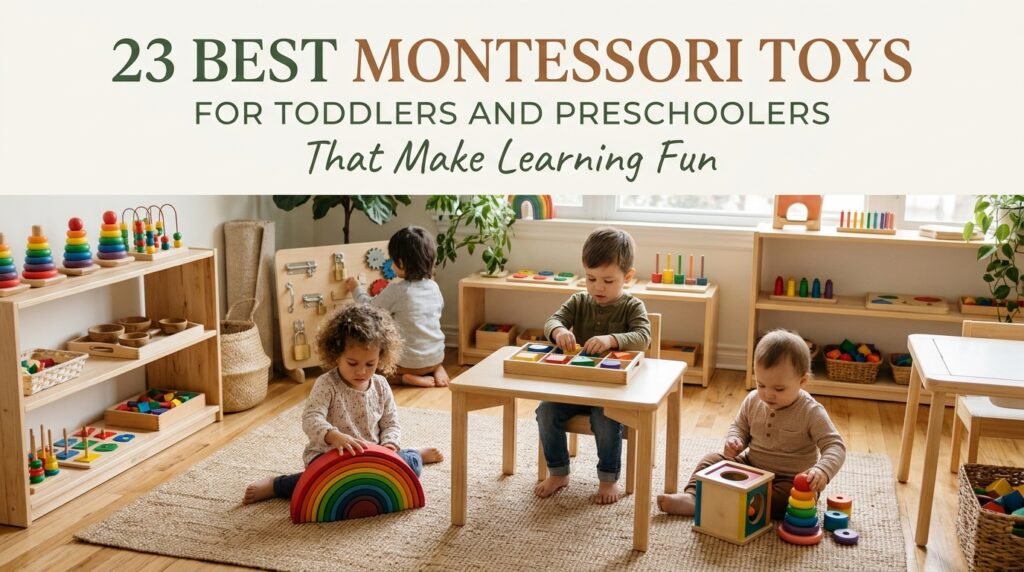
Children learn about the world through everyday experiences. Whether they are stacking wooden blocks, arranging colorful objects, pouring water between containers, or fitting shapes into a puzzle, these simple activities can become meaningful learning opportunities. This is one of the ideas behind Montessori-inspired play: giving children opportunities to explore, experiment, and develop new skills through hands-on experiences.
Montessori toys are designed to support independent exploration, concentration, creativity, and problem-solving. Instead of relying on flashing lights, electronic sounds, or complicated instructions, many of these toys focus on simple activities that allow children to discover how things work. They often feature natural materials, practical designs, and open-ended possibilities that encourage children to use their imagination.
Another wonderful thing about Montessori-inspired toys is that they can remain interesting as children grow. A set of wooden blocks, for example, might initially be used for stacking before becoming part of a pretend house, tower, or city. With the right opportunities, children can discover different ways to play with familiar objects.
If you are looking for toys that combine entertainment with meaningful learning, this guide features Montessori-inspired options for toddlers and preschoolers. From simple stacking activities to early mathematics materials, these ideas can help make playtime more engaging while supporting important developmental skills.
Here are some qualities to consider when choosing Montessori-friendly toys:
1. Simple Designs That Encourage Concentration
Many Montessori-inspired toys have straightforward designs that allow children to focus on the activity itself. They do not necessarily need batteries, flashing lights, or electronic sounds to keep a child interested.
For example, wooden stacking rings allow children to explore different sizes, colors, and arrangements using their hands. A simple shape sorter gives them an opportunity to identify shapes and work out where each piece belongs.
The goal is not to make every toy look plain or identical. Instead, choose products with features that serve a clear purpose and give children room to explore without unnecessary distractions.
2. Activities With a Clear Learning Purpose
A thoughtfully designed educational toy usually offers an opportunity to practice a particular skill or explore a concept. This does not mean that children must use it in only one way. Rather, the toy should provide a meaningful starting point for learning.
Depending on the activity, Montessori-inspired toys can encourage:
· Sensory development: Exploring different textures, shapes, sounds, and materials.
· Fine motor skills: Practicing grasping, stacking, threading, and arranging objects.
· Gross motor skills: Developing movement, coordination, and balance.
· Language development: Learning new words through storytelling, picture matching, and object identification.
· Early mathematics: Exploring numbers, counting, patterns, and measurements.
· Creativity: Experimenting with art materials, building pieces, and imaginative activities.
· Scientific curiosity: Observing cause and effect, exploring nature, and discovering how objects work.
These skills develop gradually through different experiences. A good toy provides an enjoyable way for children to practice without turning playtime into a formal lesson.
3. Connections to Everyday Life
Young children are naturally curious about the people, objects, and activities they see around them. Toys that represent familiar experiences can help them understand their surroundings and develop practical knowledge.
For example, a child-sized cleaning set allows children to imitate simple household activities. Realistic animal figures can introduce different species and their names, while miniature kitchen accessories provide opportunities for pretend cooking.
These activities connect play with everyday experiences. They also give parents opportunities to introduce new vocabulary, answer questions, and encourage children to participate in age-appropriate tasks.
Best Montessori-Inspired Toys for Toddlers (1–3 Years Old)
The toddler years are filled with exciting discoveries. Children become increasingly interested in movement, objects, textures, colors, and activities they can complete independently. They enjoy repeating actions, testing different possibilities, and figuring out how things fit together.
During this stage, toys that encourage hands-on exploration can be particularly useful. Look for products with manageable pieces, simple activities, and designs appropriate for your child’s age and abilities.
Here are some Montessori-inspired toy ideas worth considering.
1. Rainbow Stacking Rings
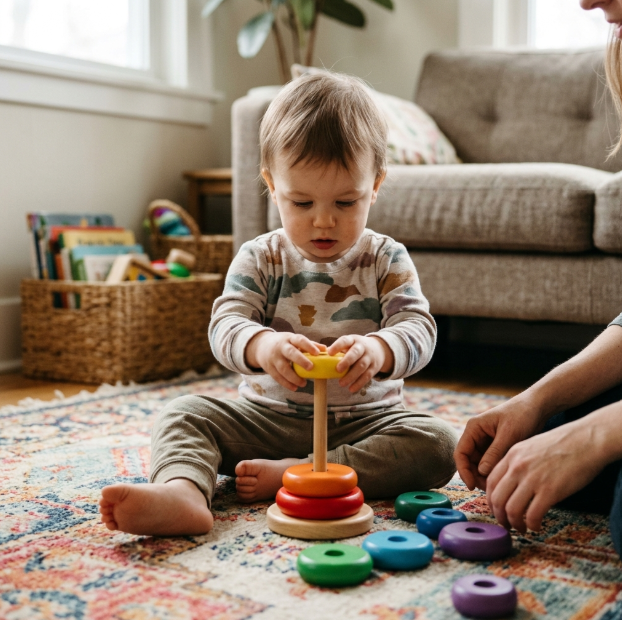
Rainbow stacking rings are a classic choice for introducing toddlers to sorting, arranging, and stacking activities. The toy typically includes rings in different sizes and colors that children place onto a central post.
At first, little ones may simply enjoy removing and replacing the rings. As they become more familiar with the activity, they can begin arranging the pieces according to size or color.
This type of play encourages visual recognition, hand-eye coordination, and fine motor development. Parents can also introduce simple words such as big, small, first, last, and different colors while playing together.
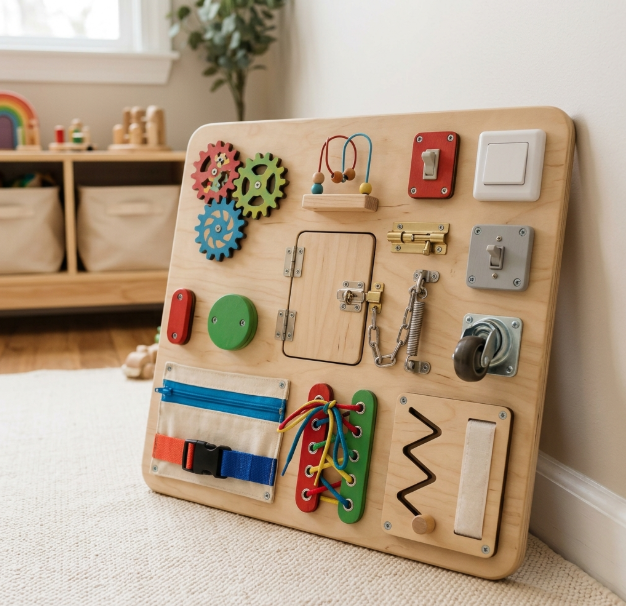
2. Montessori-Inspired Busy Boards
Busy boards feature different everyday mechanisms and activities attached to a board. Depending on the design, children may find zippers, buckles, switches, latches, and other interactive elements.
These activities provide opportunities to practice finger movements and learn how familiar objects function. They can also introduce practical skills through supervised exploration.
Busy boards are available in different sizes, making them convenient for play areas or supervised travel activities. When choosing one, check that every attachment is securely fastened and appropriate for the child’s age. Avoid loose components or small detachable parts that could present a choking hazard.
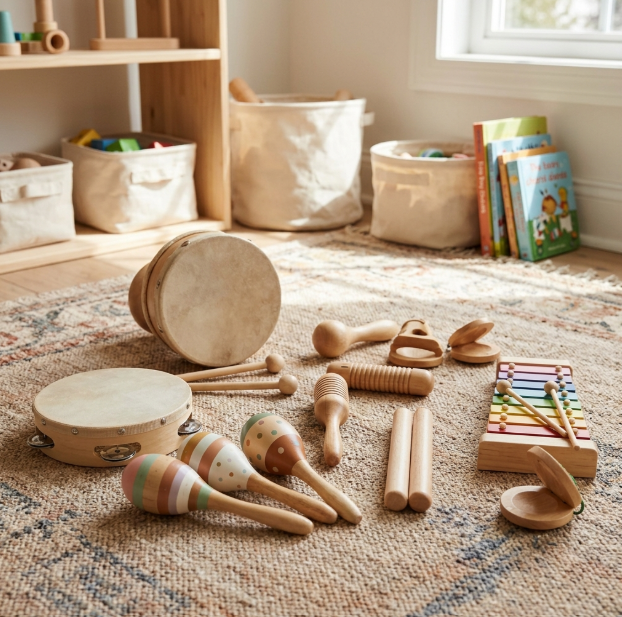
3. Wooden Musical Instrument Sets
Music offers another enjoyable way for young children to explore their senses and express themselves. A wooden musical instrument set may include simple percussion instruments such as tambourines, rhythm sticks, maracas, and small drums.
Children can experiment with different sounds, copy rhythms, and discover how their movements create music. Parents can make the activity more interactive by singing familiar songs or playing simple rhythm games.
Musical play can encourage listening skills, coordination, creativity, and an early appreciation for different sounds. Choose instruments with smooth finishes, secure components, and sound levels suitable for young ears.
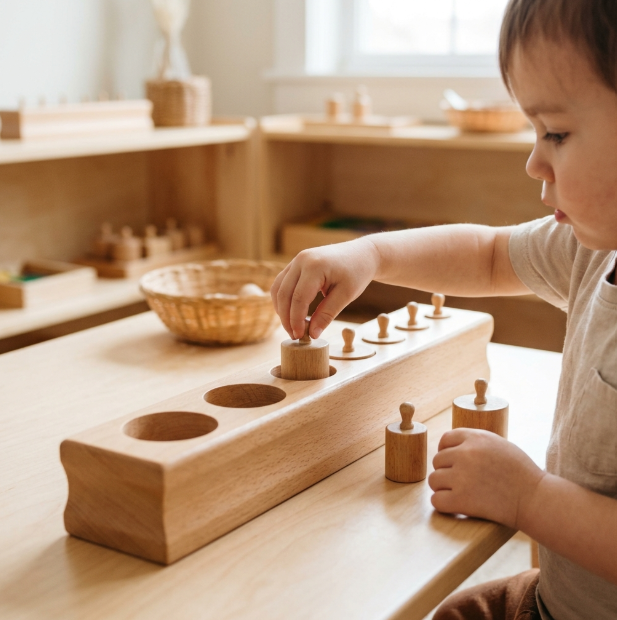
4. Knobbed Cylinder Blocks
Knobbed cylinders are traditional Montessori learning materials that introduce children to differences in height, width, and size. The pieces usually consist of wooden cylinders with small handles that fit into matching spaces on a block.
Children practice removing each cylinder and returning it to the correct opening. Through repetition, they begin noticing how objects differ and how each piece fits into its designated space.
This activity can support visual discrimination, concentration, and hand-eye coordination. It also provides an introduction to comparing objects using simple mathematical language.
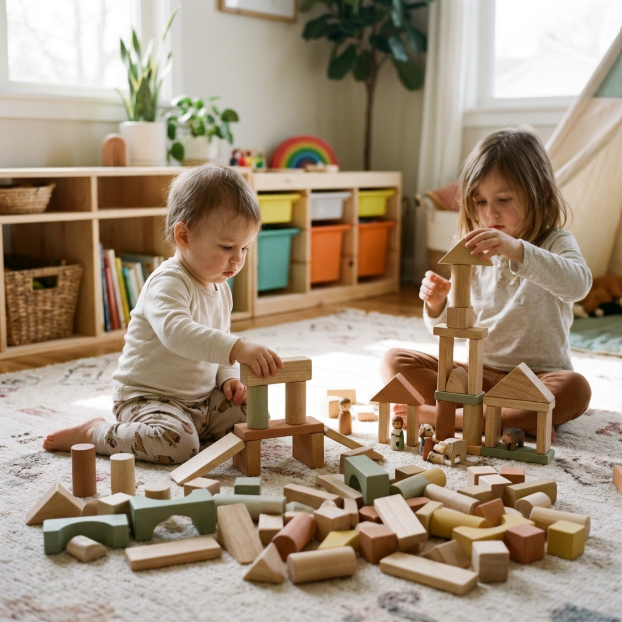
5. Wooden Building Blocks
Wooden blocks are among the most versatile toys for young children. A basic collection can become a tower, bridge, house, road, or anything else a child imagines.
Toddlers may begin by stacking two or three pieces before discovering how to create larger structures. They can experiment with balance, size, shapes, and spatial relationships as their building skills develop.
Unlike toys with a single intended outcome, wooden blocks offer plenty of room for creative exploration. Parents can introduce simple challenges, such as building a tall tower or creating a bridge for toy animals, while allowing children to make their own decisions.
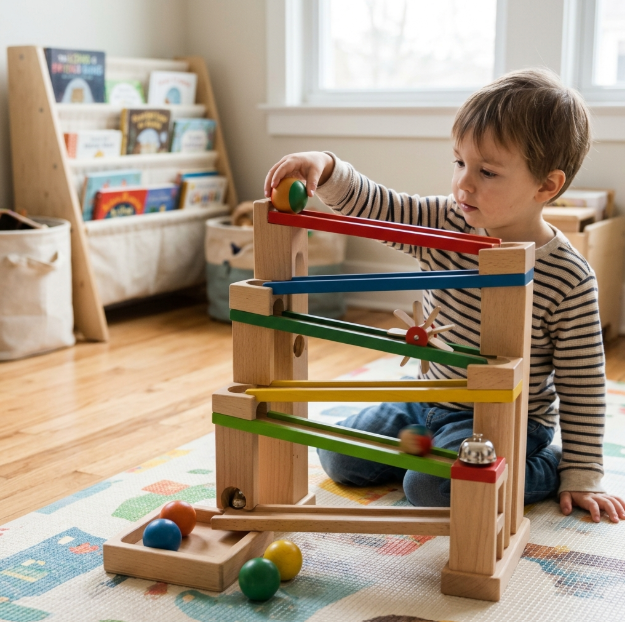
6. Wooden Marble Run
A wooden marble run introduces children to movement and cause-and-effect relationships. The basic concept involves arranging a track or structure that allows a ball to travel from one point to another.
Watching the ball move through the different sections can encourage curiosity about direction, speed, and gravity. Children may also enjoy predicting where the ball will go before releasing it.
For toddlers, select only age-appropriate designs with larger components and follow the manufacturer’s safety guidance. Small marbles are choking hazards and should never be accessible to children under three.
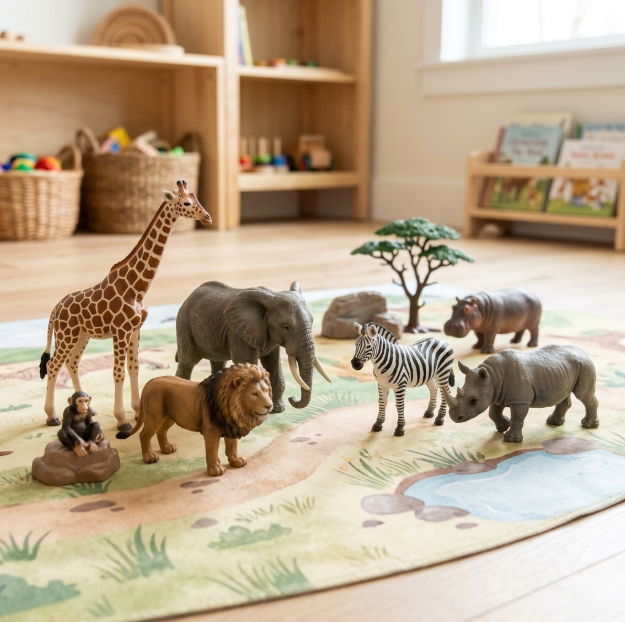
7. Realistic Safari Animal Figures
Animal figures provide a simple way to introduce toddlers to wildlife and nature. A collection of safari animals might include elephants, lions, giraffes, zebras, monkeys, and other familiar species.
Children can identify the animals, imitate their sounds, and arrange them into different groups. Parents can use these figures to introduce basic vocabulary, discuss animal characteristics, and encourage simple storytelling.
Realistic designs can also help children recognize what animals look like in the natural world. Look for durable figures with age-appropriate sizing, smooth surfaces, and clearly stated material information.
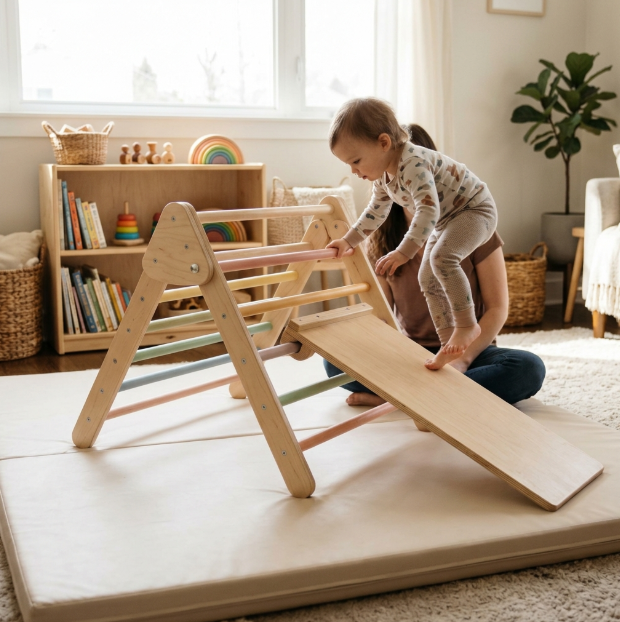
8. Pikler Triangle Climbing Frame
A Pikler triangle is a climbing structure associated with Hungarian pediatrician Emmi Pikler’s approach to supporting children’s natural movement development. It typically features a wooden triangular frame with several rungs that children can use for supervised climbing.
This equipment offers opportunities to explore movement, coordination, and physical confidence. Some versions also include additional accessories, such as ramps or slides.
A Pikler triangle can be a useful addition to an indoor play area, provided there is enough space and a suitable surface around it. Always follow the manufacturer’s age, weight, assembly, and supervision recommendations.
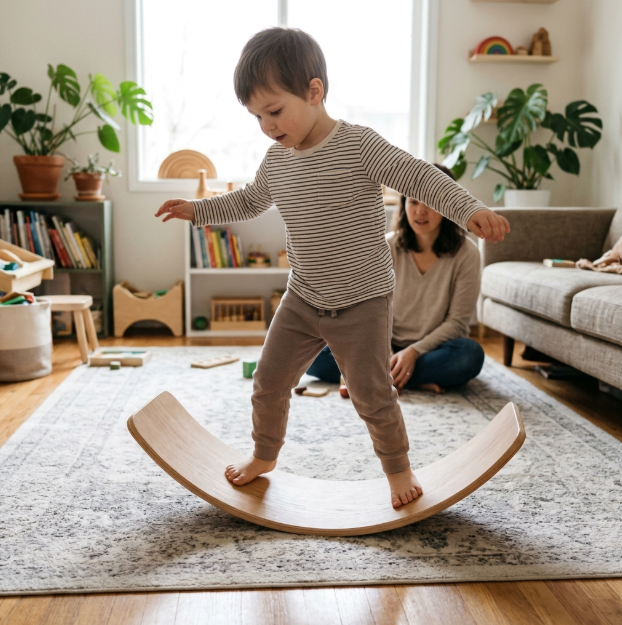
9. Wooden Balance Board
A wooden balance board is a curved or gently shaped platform that children can use for different movement activities. It may be used for gentle rocking, balancing, or creating imaginative play scenarios.
Some children enjoy pretending it is a bridge, boat, tunnel, or part of an obstacle course. This flexibility makes it an interesting option for children who enjoy active play.
Balance boards can provide opportunities to practice body awareness and coordination. Choose a stable product with a smooth finish and an appropriate weight limit, and make sure children use it on a suitable surface with adult supervision.
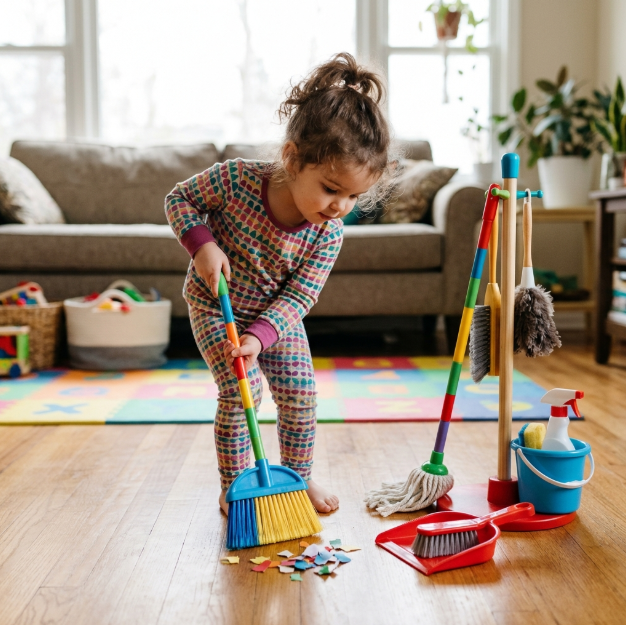
10. Child-Sized Cleaning Sets
A child-sized cleaning set allows toddlers to imitate everyday household activities in a playful and age-appropriate way. These sets may include small brooms, dustpans, brushes, and other lightweight accessories.
Children often enjoy copying what adults do, especially when they are given simple tasks they can complete independently. Sweeping a small area or helping collect lightweight toys can introduce practical routines and responsibility.
These activities can also encourage coordination and independence. Choose tools designed specifically for children, and keep cleaning chemicals, sharp objects, and other household hazards out of reach.
11. Balance Bikes
A balance bike is a small pedal-free bicycle designed to help children practice steering, coordination, and balance. Instead of using pedals, children move forward by pushing their feet against the ground.
This design allows young riders to become familiar with controlling a bicycle at a comfortable pace. It can also make outdoor activities more engaging for children who enjoy movement and exploration.
When selecting a balance bike, consider your child’s age, height, and ability to place both feet comfortably on the ground. A properly fitted helmet and a safe riding area are essential.

Best Montessori-Inspired Toys for Preschoolers (3–5 Years Old)
Preschoolers are ready to explore more challenging activities as their language, coordination, memory, and problem-solving abilities continue to develop. They often become interested in letters, numbers, patterns, building activities, and imaginative play.
This is a wonderful stage to introduce toys that offer more opportunities for experimentation and early academic exploration. However, learning should still feel enjoyable rather than pressured. Let your child explore at a comfortable pace and provide assistance when needed.
Here are some educational toy ideas that can make preschool playtime more engaging.
1. Sensory Play Kits
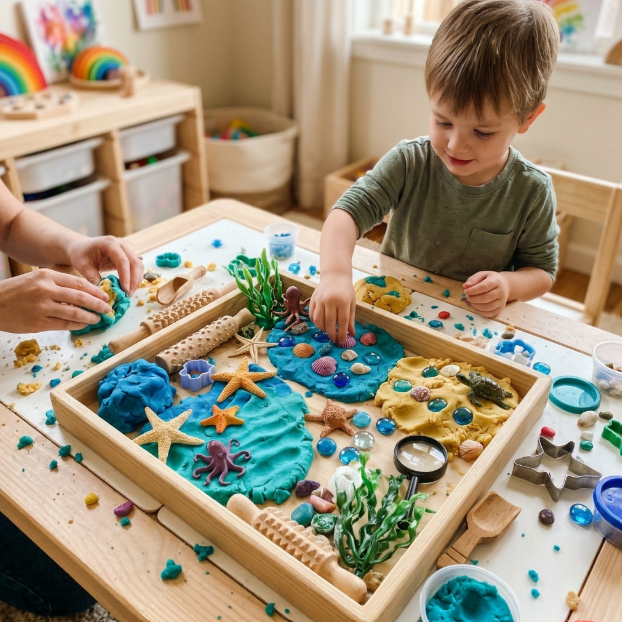
Sensory play kits offer children different materials and activities to explore through touch, sight, and other senses. Depending on the set, they may include playdough, textured accessories, themed figurines, molds, and scooping tools.
A sea-themed playdough kit, for example, can encourage children to create ocean animals, underwater scenes, and imaginary marine environments.
Sensory activities can provide opportunities to practice fine motor movements, describe textures, explore colors, and develop creativity. Adults should check the materials and age recommendations carefully, particularly when kits contain small accessories or ingredients that are not intended to be eaten.
2. Pattern Blocks and Design Boards
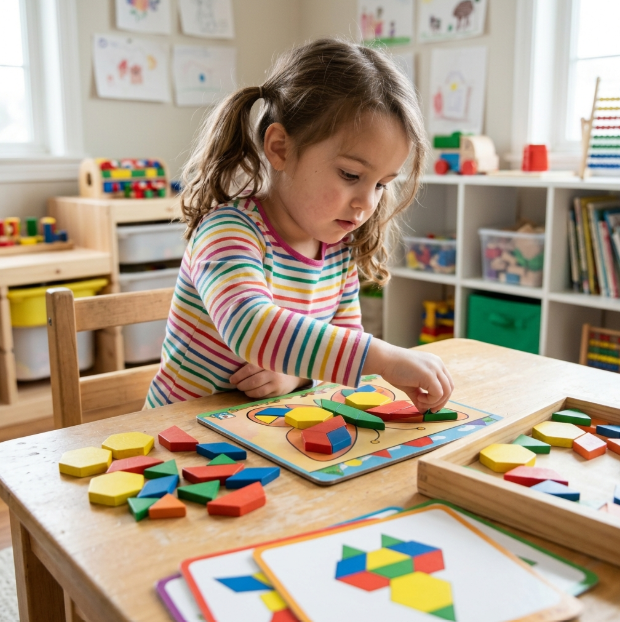
Pattern blocks are colorful geometric pieces that children can arrange to create different pictures and designs. Some sets also include activity boards featuring sample patterns that children can copy.
These materials introduce early geometry concepts through hands-on exploration. Children can compare shapes, recognize patterns, and experiment with different arrangements.
As their confidence develops, they can create their own designs instead of following examples. This encourages visual thinking, creativity, and problem-solving while introducing concepts such as symmetry, shape, and spatial relationships.
3. Spinning Alphabet Blocks
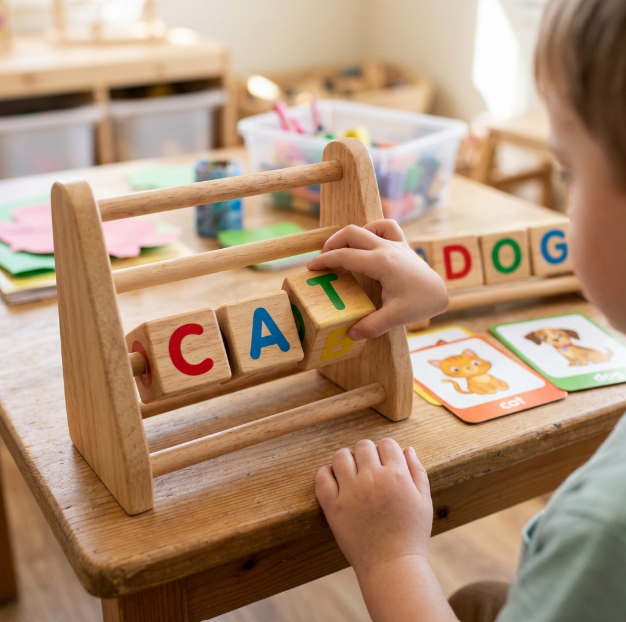
Spinning alphabet blocks provide an interactive way for preschoolers to explore letters and simple word combinations. The blocks usually feature rotating sections that allow children to change letters and form different three-letter words.
This activity can introduce letter recognition, beginning sounds, and early spelling concepts. Parents can make it more enjoyable by asking children to identify familiar words or match the words with pictures.
Choose a set that matches your child’s current reading readiness. Some preschoolers may enjoy recognizing individual letters first, while others may already be interested in building simple words.
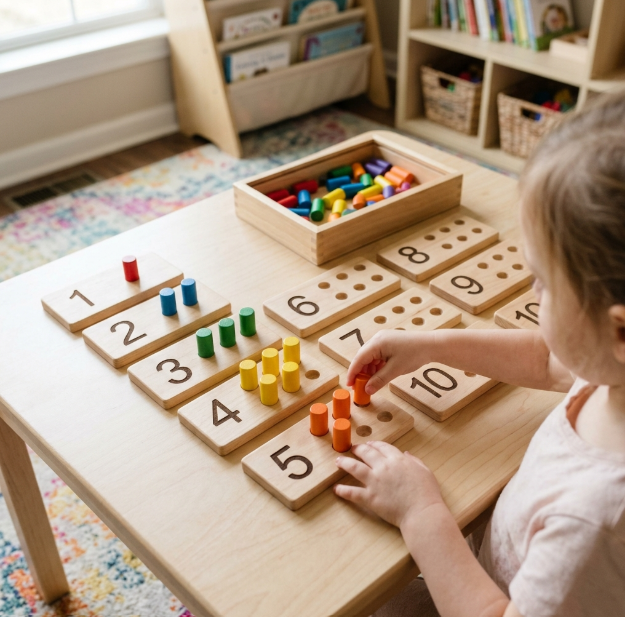
4. Number Peg Boards (1–10)
Number peg boards help preschoolers explore counting and number recognition using physical objects. These boards generally feature numbered sections where children place the corresponding number of pegs.
For example, the number three can be represented by placing three pegs into its designated space. This gives children a visual and hands-on way to connect written numbers with actual quantities.
Number boards can support early mathematics, counting practice, and fine motor coordination. Parents can also use everyday objects to reinforce the same concepts during play.
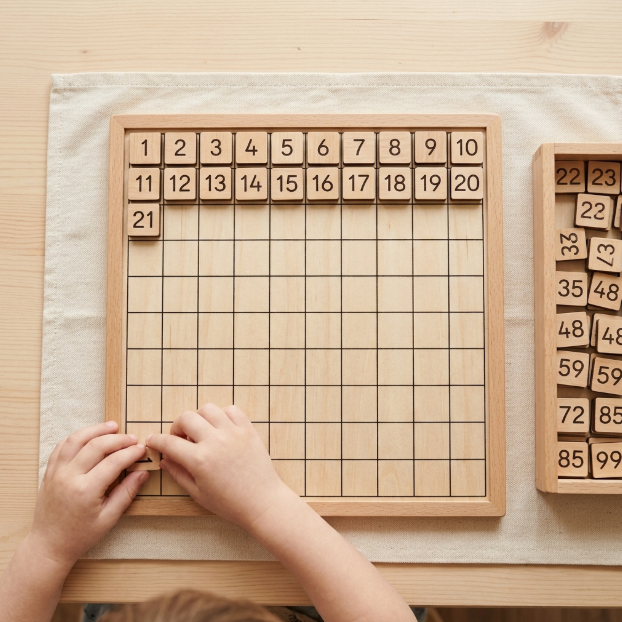
5. Montessori Hundred Board (1–100)
A hundred board is a learning material featuring numbered spaces arranged in a grid, usually from one to one hundred. Children place number tiles into the correct positions to complete the sequence.
The activity introduces number order, counting patterns, and early numerical relationships. It can also help children notice how numbers change across rows and columns.
For younger preschoolers, parents may begin with smaller number sequences before gradually introducing more challenging arrangements. This keeps the activity manageable while allowing children to build familiarity with numbers.
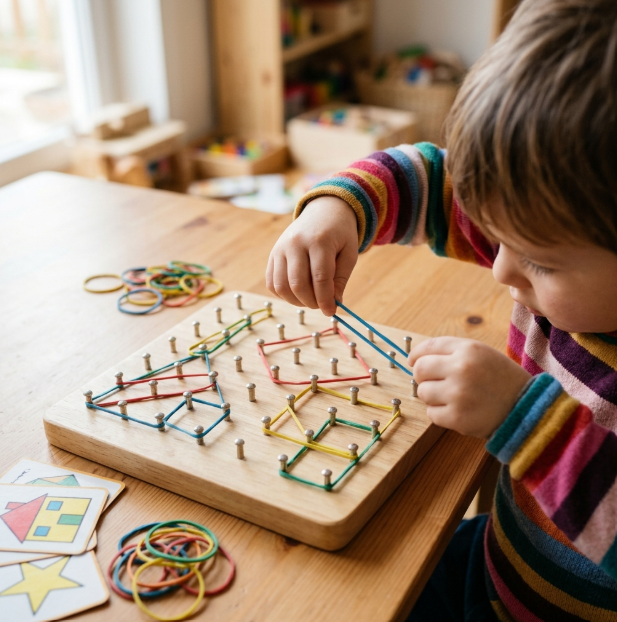
6. Wooden Geoboard
A wooden geoboard is a flat board with small pegs arranged across its surface. Children use elastic bands to connect the pegs and create different shapes, lines, and patterns.
The activity offers an interesting introduction to geometry and spatial reasoning. Children can begin with simple shapes, such as triangles and squares, before experimenting with more detailed designs.
Geoboards also provide opportunities to strengthen finger coordination and visual planning. Make sure the elastic bands are suitable for the child’s age and used with adult supervision.
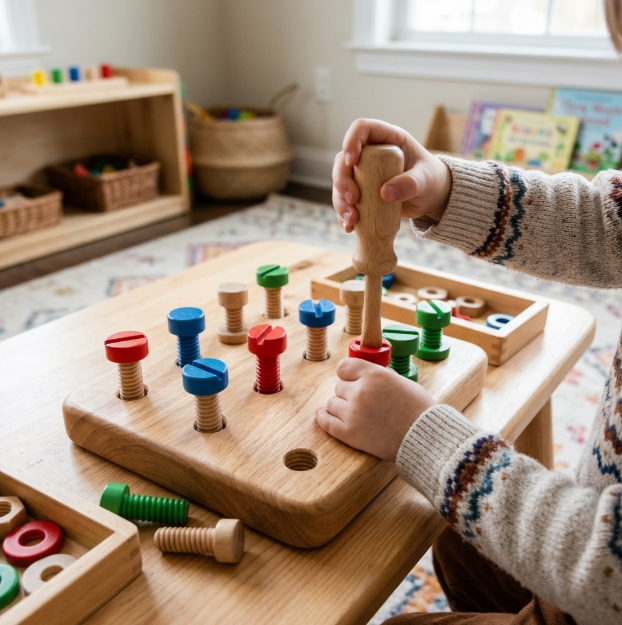
7. Children’s Screwdriver and Construction Board
A construction board designed for children can introduce basic tool-related activities in a controlled learning environment. Some sets include a wooden board, large practice screws, and a child-sized screwdriver.
Children can practice turning, loosening, and tightening the pieces while learning how different components fit together. This activity encourages hand coordination, concentration, and practical problem-solving.
Always select a toy specifically manufactured for the intended age group. Check that the components are secure, appropriately sized, and free from sharp edges. Adult supervision is important whenever children are using tools, even toy versions.
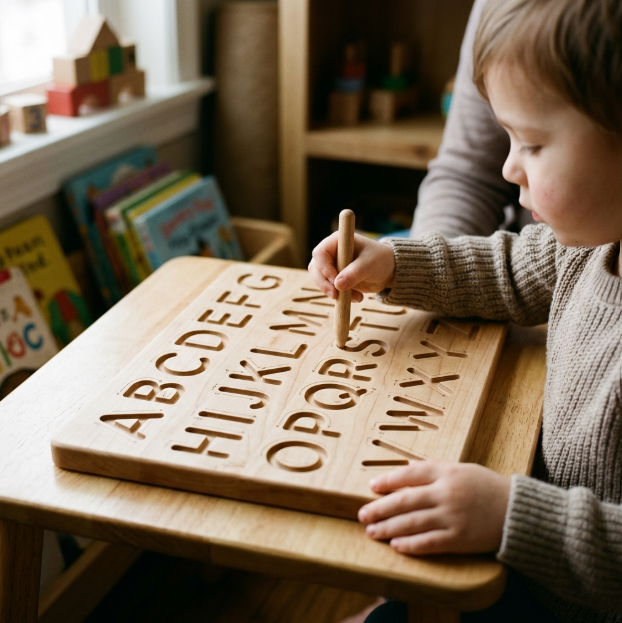
8. Alphabet Tracing Board
Alphabet tracing boards provide a hands-on way for preschoolers to become familiar with letter shapes. Many designs feature engraved letters that children can follow using their fingers or a suitable tracing tool.
The activity introduces letter formation and directional movement before children begin more formal handwriting practice. It can also encourage concentration and visual recognition.
Parents can make the experience more enjoyable by saying the letter’s name and identifying simple words that begin with the same sound. Keep practice sessions relaxed and allow children to explore without expecting perfect handwriting.
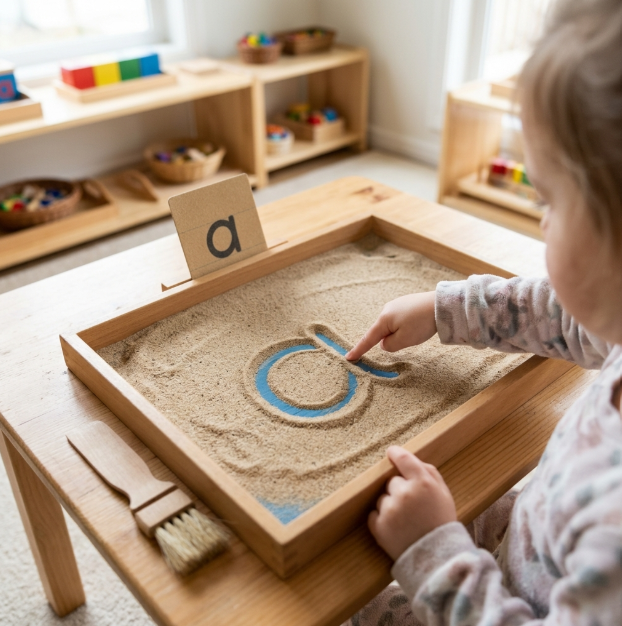
9. Montessori Letter Writing Sand Tray
A sand writing tray is a simple learning material that allows children to practice drawing letters, shapes, and patterns using their fingers or a suitable writing tool.
The textured surface provides a different experience from writing on paper. Children can create a letter, smooth the sand, and begin again whenever they want.
This reusable activity can introduce early writing movements while supporting sensory exploration and fine motor practice. Use a clean, age-appropriate material and supervise children throughout the activity to prevent accidental ingestion.
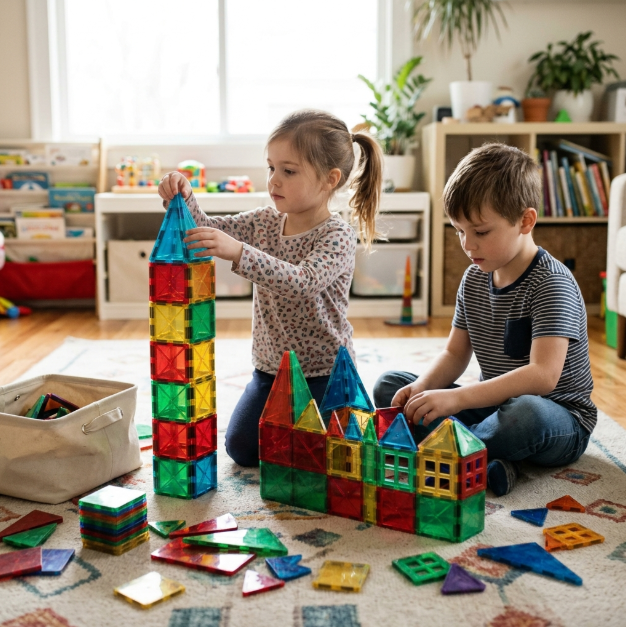
10. Magnetic Building Tiles
Magnetic building tiles are colorful construction pieces that connect through built-in magnets. Children can use them to create houses, towers, geometric shapes, and other three-dimensional structures.
These toys offer opportunities to explore shapes, patterns, symmetry, and spatial relationships. They also encourage children to experiment with different building arrangements and discover how individual pieces connect.
Some popular options include the Connetix magnetic tile collection. However, there are different brands and designs available, so compare their construction, age recommendations, and safety information before purchasing. Regularly inspect the tiles for cracks or damage, as loose magnets can pose serious hazards if swallowed.
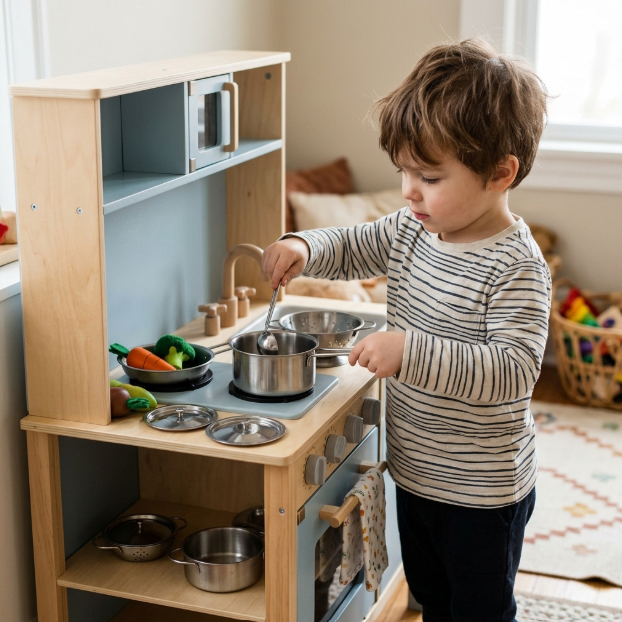
11. Stainless Steel Pots and Pans Play Set
A child-sized stainless steel cooking set can introduce preschoolers to pretend cooking and everyday kitchen activities. Depending on the collection, it may include miniature pots, pans, utensils, and other accessories.
Children can use the pieces to create imaginary meals, organize a pretend kitchen, or play restaurant with family members. Parents can introduce food names, kitchen vocabulary, and simple conversations about preparing meals.
This type of play can encourage imagination and practical understanding of everyday routines. Check that the set is specifically designed for children, has smooth edges, and is suitable for its intended play purpose. Toy cookware should not automatically be assumed safe for use with real heat or food.
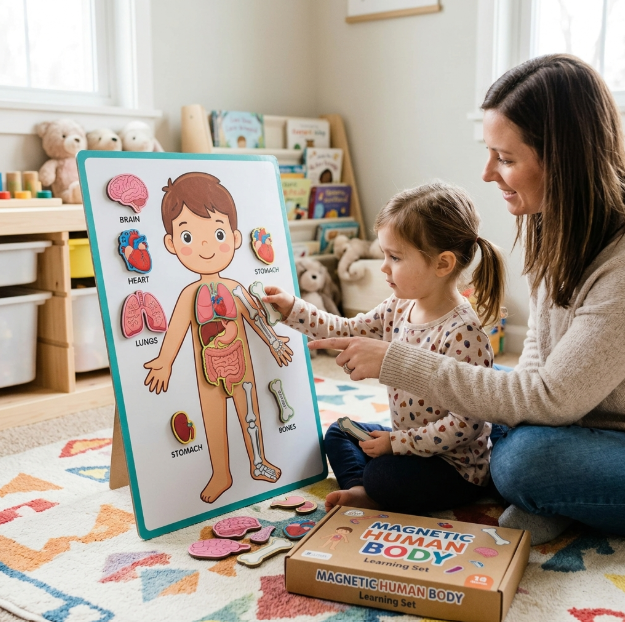
12. Magnetic Human Body Learning Set
A magnetic human body learning set offers preschoolers an introduction to basic anatomy through interactive pieces. These sets commonly feature a body outline and removable magnetic illustrations representing selected body parts or organs.
Children can arrange the pieces, identify familiar body parts, and learn simple facts about how the human body works. Parents can introduce age-appropriate explanations about the heart, lungs, stomach, and other body structures.
This activity can encourage curiosity about science and help children develop new vocabulary. Choose a set with clear illustrations, appropriate educational content, and magnetic components securely enclosed within the pieces.